
A Guide To Sumo Betting
 Learn how and where to bet on one of the world’s oldest combat sports with expert guides, sportsbook comparisons, and tournament coverage from https://www.betwrestling.net/. Sumo wagering is built around fast bouts, clearly defined rules, and a tournament structure that gives you multiple angles to attack, from daily head-to-head matchups to outright winner odds and total wins markets.
With six major tournaments each year and constant movement in the rankings, there is no shortage of value for players who understand form, motivation, and stylistic matchups. On this page, you will find the best sumo betting sites for 2026, a breakdown of how professional bouts and tournaments work, key terms, example odds, and practical tips for success.







Where To Find Odds And Match Lines
The laws for sports betting vary by region in the USA, but most states allow for sportsbooks in some form. While it is possible for local markets to offer odds on sumo matches or tournament champions, we’ve yet to see any.
Offshore sportsbook sites are the best places to find odds and lines. Since their focus is more international, they tend to cover more global events and tournaments in the days and weeks leading up to each event.
How Matches and Tournaments Work
Professional bouts are remarkably brief, often ending in seconds, yet governed by absolute clarity, a contrast to the longer, point-based matches seen in NCAA wrestling. In sumo, two athletes face off in a 4.55-meter clay ring (dohyō), and the objective is twofold: force the opponent out of the straw-bale perimeter or cause any part of their body—besides the soles of their feet—to touch the ground.
Striking with open palms, tripping, and gripping the heavy silk belt (mawashi) are legal, while punching, kicking, and hair-pulling result in immediate disqualification. Unlike the seasonal dual meets and championship format of NCAA wrestling, the professional sumo calendar revolves around six major Grand Tournaments each year, held in odd-numbered months.
Each event lasts exactly 15 days. Athletes in the top divisions compete once daily, aiming for a kachi-koshi (a winning record of 8–7 or better), which ensures a rank promotion. Conversely, a losing record (make-koshi) leads to demotion.
The individual with the most wins at the end of the 15th day is awarded the Emperor’s Cup. If two or more fighters are tied for the lead on the final day, a sudden-death playoff determines the ultimate champion, ensuring every tournament ends with a definitive victor.
Betting on sumo wrestling is straightforward once you understand the main markets, much like WWE wrestling betting, where fans focus on match outcomes and storylines. With sumo tournaments spanning 15 days and each top-division rikishi competing once per day, sportsbooks can offer both single-match wagers and longer-range tournament markets.
Most start with head-to-head bout lines, then branch into futures and props based on form, rank, injuries, and style matchups. Because bouts are so short, research matters more than in-play reaction. A wrestler’s recent momentum, withdrawal risk, and historical success against certain opponents can all shape value.
Common markets include:
- Match lines: Wager on which rikishi will win an individual bout.
- Futures: Wager on who will win the tournament or finish with a certain number of victories.
- Tournament props: Gamble on win totals, special prizes, playoff outcomes, or whether a wrestler records kachi-koshi.
- Live betting: Available at some sportsbooks during featured matches or major tournament days.
Essential Terms
Kachi-koshi: A winning record of 8–7 or better in a 15-day tournament. This is the primary "goal" for most gamblers, as it guarantees a rank promotion or a "hold" on a current high rank.
Make-koshi: A losing record of 7–8 or worse. This typically leads to a rank demotion. A fighter who reaches 8 losses often sees their motivation (and their odds) drop significantly.
Zensho: A perfect 15–0 tournament run. These are rare and usually only achieved by elite champions at the top of their game.
Kyujo: When a wrestler withdraws from a match or the remainder of a tournament due to injury. Important: In most markets, a Kyujo withdrawal counts as a loss for that scheduled day, which can drastically shift tournament "Over/Under" win totals.
Fusho-machi: A win by default. If an opponent withdraws (Kyujo), the remaining fighter is awarded a "walkover" win. This is a crucial "lucky break" for anyone backing that athlete.
Mono-ii: A ringside conference by the judges to contest the referee's decision. Similar to a "VAR" check in soccer or a "Coach’s Challenge" in the NFL, this can flip a winning bet to a losing one in an instant.
Rikishi: The formal Japanese term for a professional sumo wrestler. Sportsbooks, commentators, and betting guides use it interchangeably when referring to competitors in individual bouts and tournament markets.
Rikishi Who Became Pro Wrestlers
The transition from the dohyō to the squared circle is a storied tradition, as the physical presence and disciplined "fighting spirit" of sumo translate seamlessly to professional wrestling.
The most iconic example is John Tenta, known globally as Earthquake. Before crushing opponents in the WWE, Tenta was an undefeated rising star in Japanese sumo under the name Kototenta.
Another titan was Genichiro Tenryu, who reached the prestigious Sekiwake rank before becoming a "Puroresu" legend. Similarly, Koji Kitao, a former Yokozuna (grand champion), made waves in both the AWA and WCW, bringing legitimate combat sports prestige to the ring.
 Other Notable Mentions
- Akebono: The first non-Japanese Yokozuna; headlined WrestleMania 21.
- The Great Kabuki: Competed in matches before his innovative "misting" career.
- Haku (Meng): Recruited from Tonga specifically for Japanese sumo.
- Giant Bernard: Had a brief, notable background in the sport.
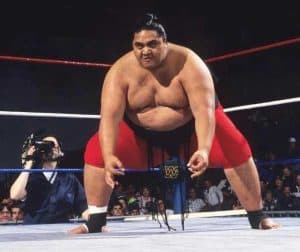
- Yokozuna - Although he possessed the formidable physical stature required for the sport, the performer known as Yokozuna lacked any formal background in the discipline. Since Yoko was of Samoan descent and born in California, he actually would have been ineligible for the "Yokozuna" title in Japan at that time.
Betting Tips
- The "Freakonomics" Strategy (Day 15): Data shows that on the final day of a tournament, a fighter with a 7–7 record (fighting for kachi-koshi) wins significantly more often than expected when facing an opponent who is already 8–6. The theory is that the 8–6 fighter, having already secured their rank, has less "incentive" to win than the 7–7 fighter whose career is on the line.
- Ride the "Ozeki Run" Momentum: Keep a close eye on rising stars like Aonishiki and Onosato in 2026. Fighters on the verge of a major promotion (like Ozeki or Yokozuna) often display a higher level of "fighting spirit" and consistency, making them safer bets for double-digit win totals.
- Fade the "Banged Up" Veterans: Because there is no "off-season," veteran rikishi often compete through significant injuries. Check the daily Kyujo (withdrawal) reports; if a favorite like Hoshoryu shows signs of a leg or shoulder tweak in Week 1, their value for a tournament win (yusho) drops significantly in Week 2.
- The "Style Makes Fights" Factor: Don't just look at records; look at techniques. A smaller, technical "puller" (like Ura) can often upset a massive "pusher" regardless of rank. Use the head-to-head history to see if a lower-ranked underdog has a specific technical advantage over a top-tier favorite.
- Watch the Day 15 Lottery: In 2026, the field is more competitive than ever. If the tournament ends in a tie, a sudden-death playoff occurs. You should look for value in "Any Other Winner" props early in the week if the top two favorites look vulnerable to the mid-rank "spoilers."
The Grand Tournament Schedule
The professional schedule is remarkably consistent. Six major tournaments, known as Honbasho, take place each year in the same months and locations. Each event begins on a Sunday and lasts for exactly 15 days.
- January (Hatsu Basho): Held in Tokyo at the Ryogoku Kokugikan.
- March (Haru Basho): Held in Osaka at the EDION Arena.
- May (Natsu Basho): Held in Tokyo at the Ryogoku Kokugikan.
- July (Nagoya Basho): Held in Nagoya at the IG Arena.
- September (Aki Basho): Held in Tokyo at the Ryogoku Kokugikan.
- November (Kyushu Basho): Held in Fukuoka at the Fukuoka Kokusai Center.
Outside of these six windows, the athletes participate in Jungyo (regional tours) across Japan, but these are exhibition-based and do not affect a fighter’s official professional ranking.
What I’ve Enjoyed Most About Betting Sumo Online
My experience with online sumo gambling has been surprisingly smooth, especially after studying the offshore sportsbook reviews. What stood out most was how easy it was to find tournament futures, daily bout lines, and occasional props without having to dig through cluttered menus. The better brands made everything simple, from checking odds before the day’s matches to getting wagers in quickly on mobile.
I also liked how clean the wagering process felt during the major basho events. Since sumo is such a fast sport, it helps when a sportsbook posts lines clearly and updates them reliably. A few of the sites listed here also did a good job with banking speed, account navigation, and overall usability, which made the experience more enjoyable. If you already follow the sport, gambling online feels like a fun change of pace with a very different rhythm.